My sister and parents surprised me with a high-end crib at my baby shower. “It’s perfect for you!” my sister said with a proud smile. “It cost a lot, so you’d better appreciate it,” my mom joked. But I never once put my baby in it. One day my husband asked, “Why aren’t we using the crib?” I simply smiled and said, “Go ahead—try placing the baby inside.” He did… and the color instantly drained from his face.
My family unveiled the crib at my baby shower like they were presenting a crown jewel.
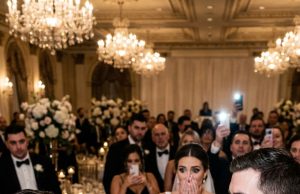
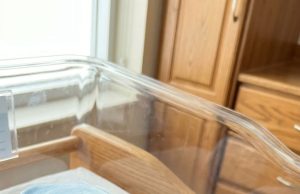
They rolled it into the living room dramatically — glossy white panels, gold accents, a thick mattress still shrink-wrapped like treasure. My sister, Tessa, clapped like a game show host.
“This is perfect for you!” she sang, as if she’d just handed me a life-saving organ.
My mother giggled, her mimosa nearly empty.
“It was expensive, so make sure you appreciate it,” she announced loudly enough for every guest to hear.
People gasped. Someone took pictures. I smiled — because that’s what you’re supposed to do when your family performs kindness like theater. But inside, something knotted tight, as if the gift wasn’t as generous as it appeared.
The crib was flawless — too flawless. No marks, no dents, not a single smudge.
Tessa leaned close, her voice syrupy.
“See? Now you can’t say we never do anything for you.” Then, louder, with that fake-sweet smile:
“At least now you have no reason to complain.”
And there it was — the real message.
I hugged them, thanked them, let the applause wash over me. But that evening, after the crowd left and the house was still, I walked alone into the nursery and stared at it under the soft lamp light.
The smell hit first.
Not “brand new furniture” — something harsh, chemical. Like finish that wasn’t cured.
I traced the inside railing. My fingers came away slightly sticky, like something had transferred to my skin.
I told myself I was just being a paranoid pregnant woman. People say hormones make you dramatic, right?
Still, I didn’t use it.
I left it set up for display, posed for guests, but we kept the plain old bassinet beside the bed. When friends asked, I joked I was “taking it slow” decorating. When my mom begged for pictures of the baby in the crib, I sent ones with the crib in the background — never Isla lying in it.
Two weeks after our daughter was born, Grant noticed.
“You never put Isla in the crib,” he said one evening, gently rocking her. “Why not? It looks gorgeous.”
I kept my tone casual. “We just haven’t needed it yet.”
Grant frowned. “You’re being weird. Your mom and Tessa spent a fortune on it.”
I smiled, took Isla from him, settled her in the bassinet.
“Then go ahead,” I murmured. “Try it.”
He blinked. “Try what?”
“Put her in the crib,” I repeated lightly. “Just for a minute.”
He hesitated but walked into the nursery. He lowered Isla toward the mattress.
The second she touched it, there was a faint, almost invisible click.
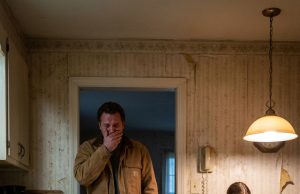
Grant froze.
His face drained of color instantly.
“What the—” he whispered, jerking Isla back up.
I stepped to the doorway, my smile gone.
“You feel it now,” I said quietly.
He stared at the crib like it had just breathed. His voice trembled.
“There’s something under the mattress. Something solid.”
He lifted it with shaking hands.
And there, taped neatly to the crib slats, was a slim black device with a blinking light — wired into the frame like it was built that way.
Grant’s voice cracked.
“Is that… a camera?”
I nodded once, swallowing hard.
“And that,” I said, “is why our baby never touched it.”
For a moment, we just stood there.
Isla made a tiny, offended noise, wriggling in Grant’s arms, and he held her closer like the crib might suddenly bite. The little device blinked again—calm, mechanical, like it had been staring at us all along.
Grant’s voice was barely above a whisper. “How did you know?”
I swallowed. “Because of my mother and the pictures,” I said quietly. “She didn’t just want baby photos. She kept saying, ‘Put her in the crib.’ ‘Make sure we see her face.’ ‘Turn the angle so we can see her sleeping.’ It wasn’t love. It was… pressure.”
Grant’s jaw tightened. He set Isla gently into the bassinet and went back to the crib, lifting the mattress again to inspect what was underneath. The device was taped in place with precision, wires threaded through a small drilled hole in the wood—too careful to be some harmless gadget.
“This isn’t some casual baby monitor,” he muttered. “This was installed.”
I nodded. “And Tessa wouldn’t stop mentioning how ‘expensive’ it was,” I added. “Like the price tag was supposed to make me forget everything else.”
His hands shook as he unplugged the crib from the outlet—an outlet we hadn’t even realized it was using, thanks to a hidden cord down the back. When he pulled the plug, the blinking stopped, but the sense of being violated didn’t.
“We’re calling the police,” he said.
I hesitated—not because I wanted to shield them, but because I could already hear the script. My mother sobbing about being “concerned.” Tessa insisting it was “for safety.” They’d call me dramatic, unhinged, ungrateful. Family games.
Grant studied my face. “No,” he said firmly. “This is our child. They don’t get to rewrite this.”
He snapped photos of the device still attached, then recorded a video while he removed it, showing the cord, the drilled hole, the tape, the logo—documenting everything. He sealed it in a zip-top bag like evidence.
Then he turned to me, eyes hard. “Did they ever have the house to themselves?” he asked.
My stomach twisted. “They insisted on delivering and assembling the crib,” I said. “Tessa wouldn’t let the delivery guys put it together. She kept saying, ‘We’ve got it. We know what we’re doing.’”
Grant’s expression darkened. “So they had your nursery to themselves.”
“Yes,” I whispered. “And my mother wandered around upstairs pretending she was ‘helping.’”
Grant exhaled slowly, the kind of breath you take when you’ve decided on something you won’t back down from. “All right,” he said. “We’re doing three things: we sweep the house, we change the locks, and we confront them—with proof in hand.”
Within an hour, he’d ordered a simple RF detector and gone through the nursery, the living room, even the smoke detectors. We didn’t find anything else, but the act of searching made my skin crawl, like the house itself had been compromised.
We changed the locks that night. Grant didn’t debate it. He just did it.
The next morning, I sent Tessa a single text:
We discovered the device in the crib. Explain.
Her reply came in under thirty seconds.
OMG you weren’t supposed to find that.
My blood ran cold.
Grant read it and looked up slowly. “Weren’t supposed to find it,” he repeated.
My hands started trembling—not from shock anymore, but from fury.
Because if it was truly about “safety,” why hide it?
Why bury it beneath a mattress like contraband?
Why react like the problem was us finding it—not it being there?
Grant’s phone lit up—my mother calling.
He put it on speaker.
Her voice rushed through, already defensive. “You need to calm down,” she said immediately. “It’s for the baby. It’s normal. Everyone does it.”
Grant’s tone was quiet but cutting. “Not without the parents’ permission,” he said. “Who can see the feed?”
Silence. Too long.
Then my mother answered, softly, “Just family.”
And in that pause, the ugliest truth settled in:
They hadn’t gifted us a crib.
They’d installed a window into our private life.
Grant didn’t shout. He didn’t need to.
“Which family?” he asked again, slowly. “Who exactly?”
My mother let out a shaky little laugh, the one she uses when she wants to make something serious disappear. “Oh, Grant, don’t be dramatic. We’re just excited. First grandbaby—”
“Names,” he said flatly.
More silence.
Then I heard Tessa’s voice in the background, sharper, like she’d grabbed the phone. “Okay, fine,” she snapped. “It’s not a big deal. Mom was just scared you’d mess something up. You’re a first-time mom. You get stressed. We wanted to make sure Isla was breathing, that she was on her back—”
I felt cold all over. “So you don’t trust me,” I said quietly.
Tessa scoffed. “Oh, please. Don’t turn this into a drama. You’ve always been oversensitive.”
Grant’s jaw flexed. “You hid a camera under a newborn’s mattress,” he said. “That’s not ‘sensitive.’ That’s illegal.”
My mother jumped back in, her voice hardening. “Illegal? Don’t be absurd. We bought it. It’s ours until she actually uses it.”
I blinked. “You think buying it means you own my nursery?” I asked.
Her tone turned cold as ice. “You should be grateful you have a family that cares so much,” she said. “Some women would kill for this kind of support.”
Support.
The word tasted bitter.
Grant took it off speaker and spoke like someone laying down terms. “Listen carefully,” he said. “You are not to come to our house. You are not to call us—only text. And you will not see Isla until we decide what safe boundaries are.”
Tessa burst out, “You can’t keep her away from us!”
Grant didn’t flinch. “Watch me,” he said.
He hung up. My hands were shaking so badly I had to sit.
I thought I’d be drowning in guilt. Instead, a strange clarity settled over me—like that hidden camera had exposed more than just a device. It showed exactly how my mother and sister viewed me. Not as a parent. Not as a grown woman. As a child who still needed supervision.
Grant sat down beside me and wrapped his fingers around mine. “You made the right call,” he said softly.
I swallowed. “They’re going to tell everyone I’m ungrateful,” I whispered.
“Let them,” he replied. “Anyone who equates spying on a baby with love isn’t someone we need in our corner.”
That afternoon, Grant filed a report with the police—not because we were looking for a legal battle, but because we needed documentation. We recorded everything: the device, the drilled hole, the message saying you weren’t supposed to find that.
Later, when my mother still showed up—pounding on our door with a bag of “presents” and an expression full of wounded indignation—Grant refused to let her in. He spoke through the doorbell camera.
“You’re trespassing,” he said steadily. “Leave now, or we’re calling the police.”
Her voice shot up, sharp and furious. “You’re making my own daughter turn against me!”
Grant replied softly, “No. You did that on your own.”
That night, Isla slept peacefully in the bassinet beside our bed, blissfully unaware. As I watched her tiny body rise and fall, a truth settled inside me—one I should have understood long ago:
Love doesn’t demand spying.
Love requires boundaries. Love requires respect.
If this whole situation makes your blood boil, tell me: would you cut ties immediately, or allow one chance for an apology with firm limits? And what would you do with the crib—return it, destroy it, or keep it as proof?