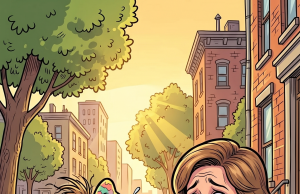
My sister disappeared ten years ago. The morning after her wedding, she simply vanished. Her clothes were left behind. No message, no explanation. Every phone she owned was switched off. We searched everywhere, but the police found nothing. Her husband was devastated. As time passed, hope slowly faded. Ten years went by in silence.
Then, just a week ago, I finally found the courage to look through her belongings in the attic. Inside a box labeled “college things,” I saw something that stopped my breath—a letter with my name on it, written in her handwriting. My hands shook as I unfolded it, and in that instant, the years between us seemed to disappear.
The letter was short, but every line was heavy with emotion. She wrote that she loved us all, but she had been overwhelmed by a fear she didn’t fully understand—pressure, expectations, and the feeling that she was losing control of her own life.
The wedding, she explained, hadn’t frightened her because of her husband, but because it forced her to realize she no longer recognized herself. Instead of speaking out, she ran.
She didn’t say where she went—only that she needed time and space to find herself again, and that she hoped I would one day understand. Holding that delicate paper, I felt relief, sadness, confusion, and a strange sense of comfort knowing she hadn’t left without caring.
In the days that followed, I began to look at my sister differently. Growing up, she had always carried everyone’s expectations—the dependable one, the strong one, the one others relied on.
Maybe she never learned how to ask for help when she needed it. At the time, we failed to see the quiet weight she was carrying. What we believed was a joyful wedding may have felt to her like a life she wasn’t choosing freely.
Reading her words now, my anger softened into compassion. She hadn’t left to hurt us—she had left to protect herself.
At the end of the letter, she expressed a gentle hope that one day she would be brave enough to return, and that we would not hold resentment in our hearts.
She apologized for the pain she caused, but believed that leaving was the only way she could avoid losing herself completely. Tears blurred my eyes as I finished reading. For the first time in a decade, I no longer felt trapped by unanswered questions. Through her faded handwriting, I felt close to her again. The letter didn’t explain everything, but it gave me something I never thought I would have—closure, or at least the beginning of it.
A week later, I placed the letter in a small box beside my bed—not as a symbol of loss, but as a reminder of love. My sister is somewhere out there, living life on her own terms. Though I still long for her return, I finally understand why she left. When I shared the letter with my family, it didn’t reopen wounds—it helped heal them. We began to remember her with warmth instead of sorrow. And each evening, I whisper a quiet wish into the darkness: that one day she will walk back into our lives, free from expectations, and welcomed with understanding, forgiveness, and open arms.