My name is Olivia Carter, and I always believed I understood everything about my thirteen-year-old daughter, Lily.
After my divorce two years ago, it was just the two of us living quietly in a small house in a peaceful Massachusetts suburb. Lily was responsible, intelligent, polite—never the kind of child who caused problems. Or at least, that’s what I believed.
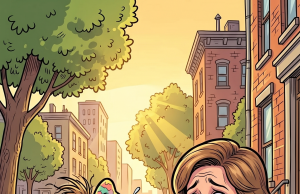
One Thursday morning, as I stepped outside with my work bag, my elderly neighbor, Mrs. Greene, waved to me.
“Olivia,” she said kindly, “has Lily been leaving school early again?”
I stopped cold.
“Leaving early? No… she’s there every day.”
Mrs. Greene looked uncertain. “I often see her coming home during school hours. Sometimes with other children.”
My heart sank. “That must be a misunderstanding,” I said, forcing a smile. “You probably saw someone else.”
But on the drive to work, a tight feeling settled in my chest. Lily had been quieter lately. Eating less. Always tired. I had blamed it on school pressure… but what if there was more?
That evening at dinner, she acted normal—calm, polite, insisting school was “fine.” When I mentioned Mrs. Greene’s comment, Lily paused briefly, then laughed it off.
“She must be mistaken, Mom. I’m at school, I promise.”
Still, I sensed a flicker of unease behind her smile.
I tried to sleep, but my thoughts kept circling. What if she wasn’t telling me everything? What if she was carrying something alone?
By two in the morning, I knew I needed answers.
The next day, I pretended everything was normal.
“Have a good day at school,” I said as Lily left at 7:30.
“You too, Mom,” she replied softly.
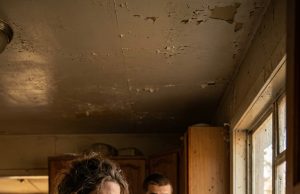
Fifteen minutes later, I returned home quietly, parked nearby, and slipped inside. My heart raced as I locked the door and went upstairs to Lily’s room.
Everything was neat. Too neat.
If she was coming home during the day, she wouldn’t expect me to be there.
I lowered myself to the floor and carefully crawled under the bed.
The space was small and dusty. I silenced my phone and waited.
9:00 a.m. Nothing.
9:20. Still nothing. My legs began to ache. Maybe I had imagined it all.
Then—
The front door opened.
I froze.
Soft footsteps. More than one. Careful, hushed, like children trying not to draw attention.
I held my breath.
“Quiet,” someone whispered.
Lily’s voice.
She was home.
And she wasn’t alone.
I stayed still beneath the bed as the footsteps moved through the hallway. Several children’s voices—three, maybe four. My heart pounded.
Lily spoke gently, “Sit in the living room. I’ll get water.”
A shaky “Thank you” answered her. That voice didn’t sound mischievous—it sounded overwhelmed.
I wanted to rush out, but I stayed hidden. I needed to understand.
From below, I listened.
A boy murmured, “My dad was angry again this morning.”

A girl sniffed. “Yesterday someone shoved me. I almost lost my balance.”
Another whispered through tears, “They took my lunch tray again. Everyone laughed.”
My chest tightened. These children weren’t avoiding school for fun.
They were seeking relief.
Then Lily’s voice, soft and tired:
“You’re safe here. Mom works until five, and Mrs. Greene leaves around noon. We’ll be okay.”
Tears filled my eyes. My daughter had been carrying this alone.
A boy asked quietly, “Lily… shouldn’t you tell your mom?”
Silence.
Then Lily whispered, “I can’t. When I was treated badly in elementary school, Mom fought so hard for me. She was exhausted and sad every day. I don’t want to put her through that again.”
I covered my mouth. She had been protecting me.
“I just want Mom to be happy,” Lily said. “So I’m handling it myself.”
Another girl added softly, “Without you, Lily, I wouldn’t know where to go.”
“We’re the same,” Lily replied. “We look out for each other.”
My tears soaked the carpet.
These weren’t children skipping school—they were children looking for safety.
And the adults who should have helped them hadn’t.
A boy added, “The teachers see it, but they don’t step in.”
“That’s because the principal told them not to make things complicated,” Lily said quietly. “He said I was exaggerating. He warned me not to cause trouble.”
My hands trembled.
The school knew.
And chose silence.
Then Lily whispered, “If we stay together, we can make it through each day.”
That was enough.
I crawled out from under the bed, stood, and walked toward the stairs. The steps creaked.
The voices below stopped.
I turned the corner and saw them—four anxious children sitting together. And Lily, exhausted yet brave, staring at me in shock.
“Mom?” she whispered. “It’s not what it looks like…”
I stepped forward, tears falling.
“I heard everything.”
Lily broke down, collapsing into my arms.
“I didn’t want you to worry,” she cried. “I didn’t want you to fight alone again.”
I held her close. “You never have to hide from me.”
The other children stood silently, afraid they would be in trouble.
“You’re safe,” I said gently. “Please sit.”
One by one, they shared their stories—being teased, excluded, ignored, brushed aside. Each word hurt.
Lily showed me evidence she had saved—messages, screenshots, emails. Proof.
A young teacher, Ms. Chloe Reynolds, had tried to help, but was stopped by administration.
I copied everything.
Then I called the parents.
Within hours, our living room filled with families—shocked, emotional, united.
“We should go to the school,” one parent said.
“No,” I replied. “We go public.”
And we did.
Within a week, the truth surfaced. An investigation followed. Leadership changed. New policies were created. The children were finally protected.
Months later, Lily smiled again. She joined a support group, helping others speak up.
One night she whispered, “Mom… real strength isn’t hiding pain. It’s sharing it.”
I hugged her.
“Yes. And we’re stronger together.”
For the first time in a long time, our home felt peaceful again.
Because this time, we didn’t face it alone.