The Heavy Weight of a Canvas Heart
The rhythmic scrape of the silver zipper was the only sound in the room, and it was so faint that it should have been swallowed by the hum of the overhead ventilation. It was not a loud noise, yet it possessed a singular, chilling gravity that seemed to pull the oxygen out of the air. The instructor, a woman who usually commanded the room with a cheerful, unwavering authority, became a statue in mid-motion while her hand remained hovered over the small, frayed backpack resting on the corner of the front desk. The third-grade classroom, which only moments ago had been a chaotic symphony of shuffling sneakers and hushed whispers about recess, plummeted into a silence so dense it felt as though the floorboards themselves were holding their breath.
Twenty pairs of wide, inquisitive eyes were suddenly riveted to the worn fabric of the bag as another tremor rippled through it. “Whose bag is this, please?” Mrs. Gable asked, her voice dipping into a low, cautious register that betrayed a sudden tightening in her chest.
From the center of the second row, a small hand rose with agonizing slowness, the fingers trembling like a leaf in an autumn gale. The girl was remarkably small for her eight years, possessing a fragile, translucent quality to her skin and shoulders that were habitually hunched as if she had spent her short life trying to become invisible to the world. “It’s… it’s mine,” she whispered, her voice barely a thread of silk in the vast quiet of the room.
Before Mrs. Gable could respond, another movement occurred within the backpack, followed by a sound that was entirely foreign to the environment of multiplication tables and alphabet posters. It was a high-pitched, rhythmic whimper, a sound of such profound vulnerability that it made the teacher’s knees hit the linoleum floor without a second thought. She reached out with trembling fingers and slowly eased the zipper further down.
A tiny, soot-colored head emerged from the shadows of the bag, its eyes squinting against the harsh fluorescent lights of the ceiling. The creature was a puppy, perhaps no more than six weeks old, with fur that was matted into damp clumps and a nose that twitched with a frantic, rhythmic uncertainty. It let out a single, desperate cry that seemed to vibrate through the very marrow of everyone watching. Mrs. Gable felt her own breath catch in a sharp, jagged knot as she cupped the tiny animal in her palms, feeling the frantic, hummingbird beat of its heart against her skin.
A collective gasp swept through the rows of desks, and one young boy near the back stood up so abruptly that his chair screeched against the floor, but he remained frozen, his mouth agape. As the puppy crawled forward, seeking the warmth of human contact, the rigid rules of the school board and the strict protocols of classroom discipline vanished into the ether. Every person in that room was suddenly haunted by a single, unspoken question: what kind of secret burden had this little girl been carrying in silence before she stepped through the schoolhouse doors that morning?
The Architecture of a Quiet Life
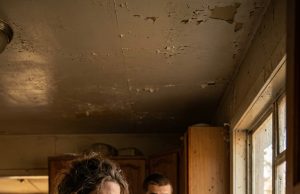
Her name was Maya Vance, and she lived in a world where the primary language was silence. She resided with her father in a cramped, drafty apartment situated above a boarded-up upholstery shop on the edge of town, a place where the hallways smelled of old dust and forgotten things. Her mother had faded away during a particularly brutal winter two years prior, and ever since that loss, the apartment had become a hollow vessel where the only sounds were the ticking of a kitchen clock and the heavy, rhythmic breathing of a man lost in his own mind.
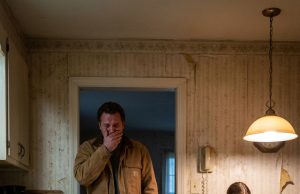
Her father worked long, grueling shifts at the local foundry, returning home to sleep through the daylight hours with a sorrow so thick it seemed to dampen the very air. He was not a cruel man, and he loved Maya with a desperate, wordless intensity, but grief had effectively robbed him of his ability to navigate the mundane details of fatherhood. Consequently, Maya had been forced to grow up in the spaces he left vacant.
She had learned the precise art of setting her own alarm, packing a lunch of peanut butter and bruised apples, and walking the three blocks to school with a backpack that looked far too large for her narrow frame. She was a child who had mastered the art of self-sufficiency because she understood, with a maturity that was heartbreaking to witness, that there was no one else to hold the other end of the rope.
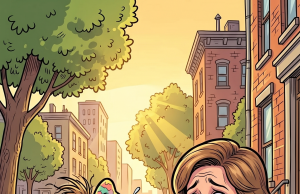
The puppy had entered her life on a Tuesday afternoon when the sky was the color of a bruised plum and a cold, relentless rain was turning the gutters into rushing rivers. Maya had been taking a shortcut through the alley behind the grocery store, her head ducked against the wind, when a sound stopped her in her tracks. It was a cry—thin, reedy, and full of a prehistoric loneliness.
She followed the sound to a soggy cardboard box wedged between two overflowing dumpsters. Inside, huddled against the wet paper, was the puppy. He was a nameless, shivering scrap of life with no collar and no promise of a future. Without a moment of hesitation, Maya had unzipped her own jacket, wrapped the creature in the warmth of her sweater, and pressed him against her chest. “Don’t be scared,” she had murmured into his damp fur. “I’m here now, and I’m never going to let you go.”
The Breaking Point of Mercy
She had smuggled the dog into her room, hiding him in a nest of old towels beneath her bed and feeding him bits of bread softened with the last of the milk. For two nights, they had existed in a secret, shared warmth, the puppy’s tiny heartbeat fluttering against her ribs like a promise kept in the dark. She had named him Pip.
On the third morning, she finally gathered the courage to speak to her father as he sat at the kitchen table, his eyes hollow and fixed on a cold cup of coffee. “Dad, I found something… a puppy. He was all alone in the rain,” she started, her voice hopeful yet fragile.
He didn’t even look up, his voice sounding as though it were coming from the bottom of a deep well. “We just can’t, Maya. I’m sorry, honey, but we can barely keep the lights on as it is. We can’t take on anything else.” Maya had nodded slowly, her heart sinking like a stone in a pond. She understood the finality of his tone; she knew what “no” sounded like when it was backed by the weight of poverty and exhaustion. But when she went back to her room to place Pip back into the box, the dog had let out a long, shuddering wail and clawed weakly at the cardboard, his eyes wide with the fear of being abandoned once again.
Something deep inside Maya, a part of her that had been holding itself together with sheer willpower for two years, finally gave way. She couldn’t leave him in the cold, silent apartment while her father slept and the shadows grew long. She carefully lined her backpack with a soft shirt, placed the dog inside, and zipped it just enough to keep him hidden while allowing a sliver of the world to reach him. “Just for today,” she whispered to him. “I’ll figure something out, Pip. I promise.”
A Pause in the Lesson
Back in the classroom, the atmosphere had shifted from academic to medicinal. Mrs. Gable was no longer the teacher; she was a guardian, cradling the small dog against her cardigan while the rest of the children watched with a reverence usually reserved for the sacred. The puppy’s breathing was shallow, his small ribs moving in an uneven, frantic rhythm that suggested he was nearing the end of his strength.
“Maya, how long has he been acting this way?” Mrs. Gable asked, her voice thick with a suppressed emotion that she struggled to keep out of her tone.
Maya kept her gaze fixed firmly on the scuffed toes of her sneakers, her hands twisting the hem of her shirt into a nervous knot. “He stopped eating yesterday,” she admitted, a single tear tracing a path through the dust on her cheek.
Mrs. Gable felt a sharp, physical ache in her throat. She looked around at her students—twenty children who were usually so full of noise and motion, now sitting in a state of absolute, heartbreaking stillness. Some were weeping quietly into their sleeves, while others gripped the edges of their desks as if they were trying to ground themselves in a reality that had suddenly become too heavy.
“Everyone, we are going to take a break from our lesson,” Mrs. Gable announced, her voice trembling slightly. She didn’t call the principal to report a violation of school policy. Instead, she called the school nurse and then reached out to a woman she knew at a local animal sanctuary—a place she had spent her own weekends volunteering.
Within minutes, the room was filled with a gentle, focused urgency. The school nurse arrived with a dropper of water and warm compresses, checking the puppy’s pale gums with practiced care. “He’s severely dehydrated and his blood sugar is dangerously low,” the nurse whispered. “But he’s a fighter, Maya. He’s still with us.”
Maya’s voice was a small, broken thing. “Is he going to leave me?” Mrs. Gable knelt in front of the girl, taking her small, shaking hands into her own. “He doesn’t have to, Maya. You brought him to the right place. You did the bravest thing you could have done.” Those words seemed to hit Maya with the force of a blow, perhaps because she had spent so long believing that her only job was to stay quiet and stay out of the way.
The Sunlight Through the Glass
The school janitor arrived with a stack of fresh, warm towels from the dryer, and the guidance counselor stood in the doorway with eyes that were suspiciously bright. Someone had the foresight to turn off the harsh, buzzing fluorescent lights, allowing the soft, golden afternoon sunlight to spill through the tall windows, bathing the room in a warmth that felt like a sanctuary.
When the representative from the animal rescue arrived, she didn’t come in with the authority of an official; she moved with a quiet respect for the gravity of the room. She was a woman who had seen the worst of humanity, yet her eyes softened the moment they landed on Maya. “I hear you’re the one who kept this little guy safe,” she said, her voice warm and grounding.
Maya shook her head, her voice barely audible. “I was just scared he would be alone again.” The rescuer smiled, a genuine and weary expression. “Being scared doesn’t mean you aren’t brave, Maya. It means you stayed even when you wanted to run. Pip was scared, too, but you gave him a reason to keep trying.” As they prepared to take Pip to the veterinary clinic, the puppy reached out a tiny, trembling paw toward Maya. She took it, her breath hitching in a small, sob-like sound as the dog licked her finger one final time. “I love you, Pip,” she whispered.
The entire classroom seemed to exhale at once, a collective release of tension that had been building since the first sound of that zipper.
The Restoration of a Family
Pip didn’t just survive; he thrived. Under the care of the sanctuary, he gained weight, his fur grew thick and glossy, and he learned how to run across a grassy field without his legs giving out beneath him. But the miracle didn’t stop with the dog.
Mrs. Gable hadn’t just saved a puppy; she had reached out to Maya’s father. She helped him find the resources he had been too exhausted to seek out on his own—grief counseling to help him find his words again, and a community support network that provided the assistance they needed to keep their heads above water. The school community rallied around them, not with pity, but with a quiet, persistent kindness that reminded the man he wasn’t alone in his struggle.
Several weeks later, the rescue center called with a message that made Maya’s heart leap. “He hasn’t stopped looking for the girl with the big backpack,” the woman said.
That Saturday, Maya walked into the rescue center, no longer hunched or trying to take up less space. She was holding her father’s hand, and for the first time in two years, he was looking at the world instead of the ground. When Pip saw her, he didn’t just walk; he galloped, his tail a blur of motion as he launched himself into her waiting arms. Maya laughed—a bright, clear sound that seemed to fill every corner of the room.
Sometimes, the rules are meant to be bent until they break. Sometimes, a child’s secret burden is actually a beacon, calling out to a world that had forgotten how to look. And sometimes, a small, worn backpack carries enough courage to mend an entire family.
If you had been the one to hear that zipper move, would you have followed the rulebook, or would you have followed the heart?